How to Compare and Self-Enroll in a Medicare Part D Drug Plan
Use Medicare.gov's Plan Finder to compare prescription drug plans, review estimated yearly costs, and enroll online yourself.
Important Notice
This guide was created to help Medicare beneficiaries understand how to compare and enroll in a stand-alone Medicare Part D prescription drug plan using Medicare.gov. If you are comfortable using online tools, Medicare.gov provides a helpful way to compare estimated drug costs and enroll online. If you are not comfortable, please contact Medicare at 1-800-MEDICARE or your local SHIP office. This guide is educational only and does not include individualized plan recommendations.
Watch: How to Enroll in a Part D Plan
Follow along with a short walkthrough of the Medicare.gov Plan Finder process.
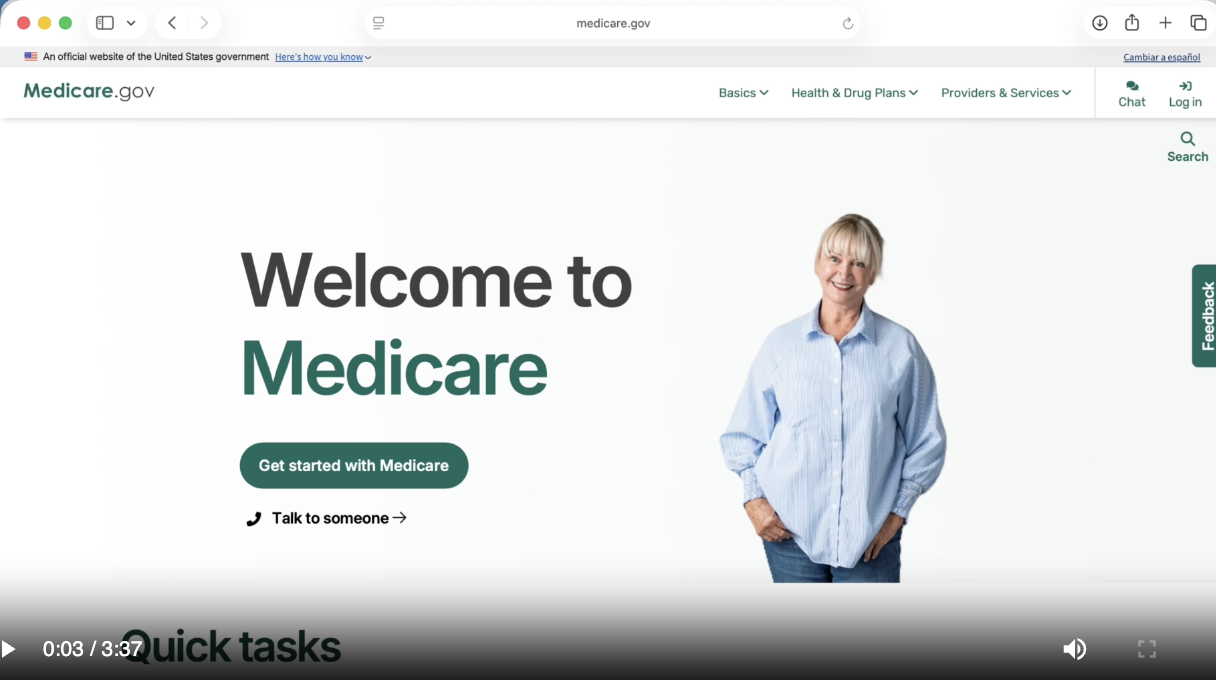
Use the controls to pause, rewind, or adjust volume.Watch directly in new tab
Before You Begin
Gather these items to make your plan comparison faster and more accurate.
Your Medicare card
Your prescription drug list
Dosage and quantity for each medication
Preferred pharmacies
ZIP code
Medicare.gov login (optional)
Good to know: You can still compare plans without creating a Medicare.gov account.
The Comparison Process
Five simple stages from entering your medications to enrolling online.
Enter Your Drugs
Choose Pharmacies
Compare Estimated Costs
Review Coverage Details
Enroll Online
Step-by-Step Guide
Follow each step in order to compare and enroll in a Part D plan.
- 1
Go to Medicare.gov
Visit Medicare.gov and select the option to compare health and drug plans.
- 2
Click "Find Health & Drug Plans"
On the Medicare.gov homepage, scroll to the Quick tasks section and click "Find Health & Drug Plans".
You can log in, create an account, or continue without logging in. If you continue without an account, enter your ZIP code and click "Continue".
- 3
Choose "Medicare Drug Plan (Part D)"
Select the stand-alone Medicare Part D drug plan option.
- 4
Answer the Drug Assistance Question
Medicare may ask whether you receive assistance paying for prescription drugs through programs such as Extra Help or Medicaid. Most people will select 'No,' but choose the option that applies to your situation.
This question is generally referring to low-income assistance programs that help pay for prescription costs.
- 5
Choose to Compare Drug Costs
Select "Yes" when asked if you want to compare prescription costs and estimated yearly expenses.
- 6
Enter Your Medications
Search for each prescription and enter dosage, quantity, and frequency. Repeat until all medications are added.
- 7
Choose Your Pharmacies
Select up to five nearby pharmacies. Costs may vary depending on the pharmacy selected.
- 8
Compare Available Plans
Plans are generally sorted by estimated yearly cost, including monthly premiums and prescription costs.
- 9
Review Carefully Before Enrolling
Monthly premiumDeductibleDrug coveragePreferred pharmaciesEstimated yearly costsPrior authorizationQuantity limitsStep therapy - 10
Keep or Change Your Plan
If your current Part D plan still appears to be the best fit for your needs, you typically do not need to re-enroll.
If your current plan is ending for next year, you would normally receive a notice from the plan in the fall.
- 11
Enroll Online
If you decide to switch plans, follow the enrollment instructions provided through Medicare.gov or the insurance carrier website.
Important Reminders
A quick checklist to review before you finalize your choice.
Frequently Asked Questions
Tap any question below to expand the answer.
Glossary
Key terms you'll see while comparing Part D plans.
Premium
The fixed monthly amount you pay to have a Part D plan, even if you don't use any prescriptions that month.
Deductible
The amount you must pay out-of-pocket for covered drugs before your plan begins to pay.
Formulary
The list of prescription drugs a plan covers, often grouped into tiers by cost.
Copayment
A fixed dollar amount you pay for a covered prescription (for example, $10 for a tier-1 drug).
Coinsurance
A percentage of the drug's cost that you pay (for example, 20% of the price).
Drug Tiers
Cost levels plans assign to drugs — typically tier 1 (lowest cost, often generics) through higher tiers for brand or specialty drugs.
Prior Authorization
A requirement that your plan approve a medication before it will cover it.
Step Therapy
A rule requiring you to try a lower-cost drug first before the plan covers a more expensive one.
Quantity Limits
A cap on how much of a medication a plan will cover within a given time period.
Preferred Pharmacy
A pharmacy in a plan's network that offers lower copays or costs for covered drugs.